

A DMCA takedown notice is often the quickest way to get your photo off a site that never asked to use it. This guide covers when to send one, where it goes, what it has to say, and what happens next. There's a free template you can copy, too.
What is a DMCA takedown notice?
The Digital Millennium Copyright Act (DMCA) is a US law from 1998. Among other things, it gives websites, hosts and platforms a "safe harbor": they aren't liable for what their users upload, as long as they remove infringing material quickly once they're told about it.
A DMCA takedown notice is how you tell them. It's a formal request from the copyright owner, or someone acting for them, asking the provider to remove or disable access to a copy of your work.
You don't need to register your copyright to send one. Your copyright exists from the moment you take the photo. Registration only matters later, if you want to sue in the US. (Here's how to register your photos.)

Takedown or get paid? Decide first
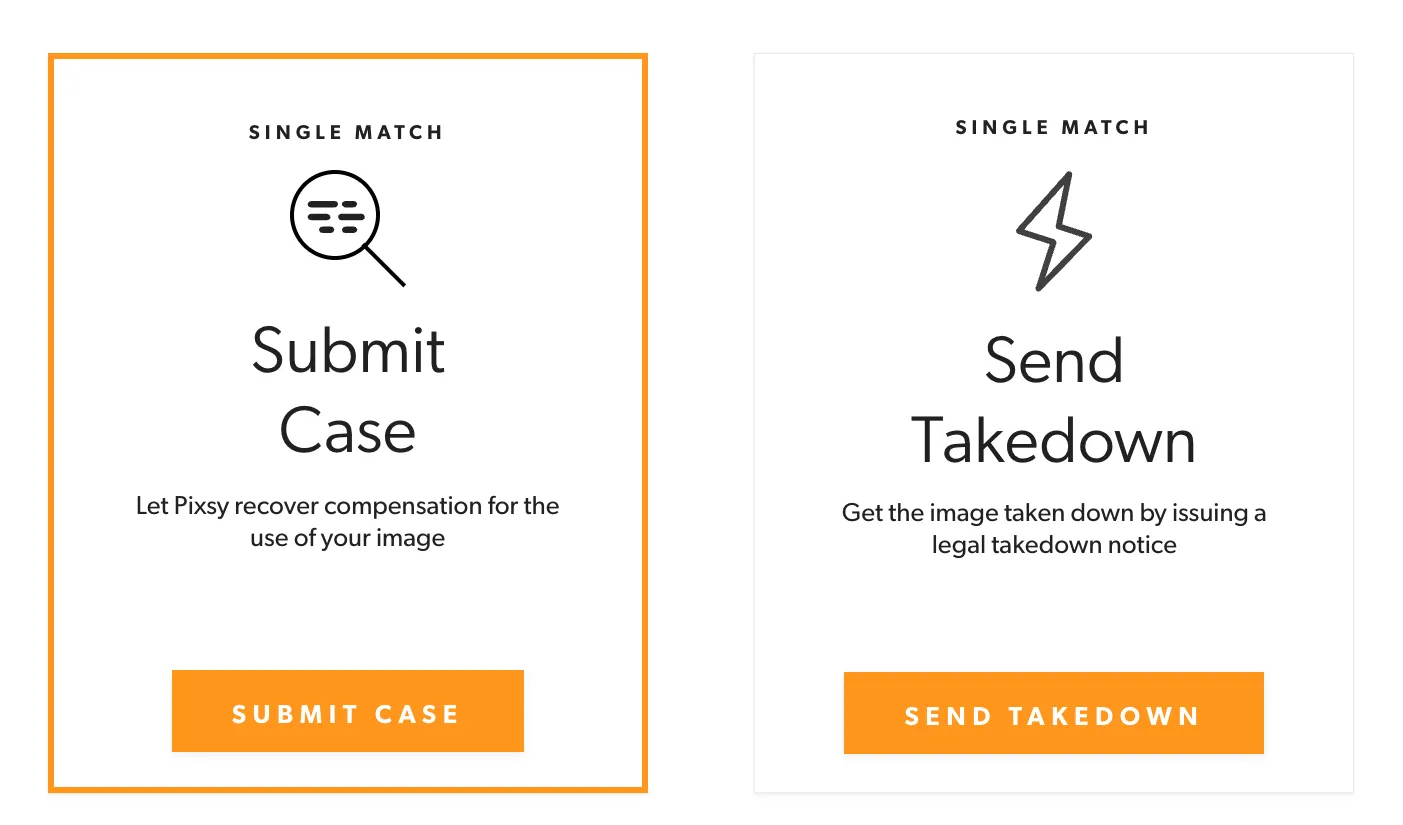
A takedown removes the image. It doesn't get you paid. So before you send one, ask who used your photo and how.
- Send a takedown when the use is personal or non-commercial: a blog, a personal social account, a forum, a pirate or scraper site. These are uses where you mainly want the image gone and payment is unlikely.
- Think twice when a business used your photo on its website, in an ad, on a product listing or in a commercial news article. You may be owed a license fee for the time it was used. Sending a takedown first tips them off, and the use may vanish before you've claimed for it.
To check, see how much a photo copyright claim is worth. If it's a commercial use, Pixsy Resolve can recover the fee for you, no win, no fee.
Before you send it
- Make sure it's your image. Photos can look alike. Compare the two closely, and check the metadata if you can.
- Check you didn't license it. That includes stock agency licenses, client deals and Creative Commons licenses you may have granted.
- Consider fair use. US courts expect you to think about fair use before you send a notice. Commentary, criticism and news reporting can sometimes qualify. The US Copyright Office fair use index is a good place to check.
- Save evidence. Take a dated screenshot of the page and note the exact image URL before anything changes.
A notice you know is false can make you liable for the other side's damages and legal costs. So take a minute on these checks.
Where to send a DMCA takedown notice
You have four main routes. Start at the top.
- The platform's own copyright form. Instagram, Facebook, Pinterest, X and YouTube all have copyright reporting forms, and that's usually the fastest route on social media. See our guide to social media copyright terms.
- The site's designated DMCA agent. Many US sites register an agent with the US Copyright Office. Search the DMCA designated agent directory for the site's name and send your notice to the contact listed.
- The web host. If there's no agent, go to the company hosting the site. A lookup tool like Whoishostingthis.com shows the host. Then find its abuse or copyright email on its website.
- Google. If the site won't respond, you can ask Google to remove the page from its search results. The page stays online, but people can't find it through search.
Sites outside the US. The DMCA is US law, but many hosts outside the US follow the same process, and most countries have their own notice-and-takedown rules. In the EU, the Digital Services Act requires hosts to act on valid notices too.
What a DMCA takedown notice must include
Under Section 512(c)(3) of the DMCA, a valid notice needs these six things:
- Your signature. A physical or electronic signature from you or your authorized agent. A typed full name works.
- The work. What was copied, such as your photo's title and where you published it.
- The copy. Where the infringing copy is, with enough detail to find it. The direct image URL is best.
- Your contact details. Name, address, phone number and email.
- A good-faith statement. That you believe the use isn't authorized by you, your agent or the law.
- An accuracy statement. That the notice is accurate and, under penalty of perjury, that you're the owner or authorized to act for them.
Leave one out and the provider can ignore the notice.

Free DMCA takedown notice template
Copy this, fill in the brackets and send it to the address you found above.
Dear Designated Agent:
My name is [Your name].
Your website or a website that your company hosts is infringing on a copyright-protected photograph owned by me. The original photo, entitled "[Title]", to which I own the exclusive copyrights, is located at: [URL where you originally published the photo, if available]
The unauthorized and infringing copy is located at: [The website using your work without permission]
It is hosted at: [The exact location of the photo on the infringing site, for example https://www.porpoiseworld.com/content/porpoise-call.jpg]
This letter is an official notification under Section 512(c) of the Digital Millennium Copyright Act ("DMCA"). I seek the removal of the infringing material referenced above. Please take note as a service provider, the Digital Millennium Copyright Act requires you, to remove or disable access to the infringing materials upon receipt of this notice.
The Online Copyright Infringement Liability Limitation Act grants service providers such as your company immunity from liability so long as you investigate and rectify this copyright violation in a timely manner. Should your company fail to do so, it may become liable for the infringement.
Please remove and disable all access to the aforementioned copyrighted work immediately. I have a good faith belief that the use of the copyrighted materials described above as allegedly infringing is not authorized by the copyright owner, its agent, or the law.
I swear, under penalty of perjury, that the information in the notification is accurate and that I am the copyright owner or am authorized to act on behalf of the owner of an exclusive right that is allegedly infringed.
Best regards,
[Your name]
What happens after you send it
- The provider acts. The law says "expeditiously" and sets no fixed deadline. Many hosts act within a few days. Some ask for more details or proof that the photo is yours, so reply quickly.
- The uploader is told. The provider lets the person who posted the image know it was removed.
- They can file a counter-notice. If they say the takedown was a mistake, the provider can restore the image after 10 to 14 business days. That won't happen if you tell the provider you've filed a court action against them in that time.
- Check that it's gone. Look again after a week, and keep your screenshots in case it comes back.
Let Pixsy send it for you
Writing notices, finding agents and checking back takes time, especially when one photo turns up on dozens of sites. Pixsy Takedown does it in one click, straight from your matches:
- Sent to the right people: Pixsy finds the correct email addresses for both the website operator and the host, and sends the notice to both. Two recipients make it much harder to ignore.
- Global: notices meet the requirements of more than 35 countries and are translated into 14 languages. Pixsy detects the country and language for you.
- Tracked: Pixsy keeps checking the page and alerts you when the image is removed.
- Low cost: 95 cents or less per notice, based on the Personal plan at $19 a month.
- Proven: more than 100K takedowns sent so far.
"One stolen photo is a nuisance. The same photo on 40 sites is a full-time job. That's why we built Takedown to send the notice in one click, in the right language for each country."
— Kain Jones, Co-founder and CEO, Pixsy
You can monitor 500 images free to see where your photos are being used, then choose a takedown or a compensation claim for each match. Sign up free.
To stop it happening again, here are 13 ways to protect your images online.
DMCA takedown FAQ
Do I need to register my copyright to send a DMCA takedown?
No. Your copyright exists from the moment you create the photo, and you can send a takedown notice without registering it. In the US, registration matters if you want to sue, and registering early makes statutory damages available.
How long does a website have to remove my image?
The DMCA says providers must act "expeditiously" but sets no fixed deadline. Many hosts remove the image within a few days. If nothing has happened after a week or two, follow up, or go to the web host or Google.
Can I send a DMCA takedown to a site outside the US?
Yes. Many hosts outside the US follow the same process, and most countries have their own notice-and-takedown rules. Pixsy's takedown notices meet the requirements of more than 35 countries and are translated into 14 languages.
What happens if they file a counter-notice?
The provider can put the image back after 10 to 14 business days, unless you tell it you've filed a court action against the uploader in that time.
Will a DMCA takedown get me paid?
No. A takedown removes the image; it doesn't recover a license fee. If a business used your photo commercially, a compensation claim is usually the better first step. Pixsy Resolve handles these on a no win, no fee basis.
Can I get in trouble for sending a DMCA notice?
Only if you knowingly make a false claim, for example about a photo you don't own or a use you licensed. In that case you can be liable for the other side's damages and legal costs. Check ownership, licenses and fair use first.


